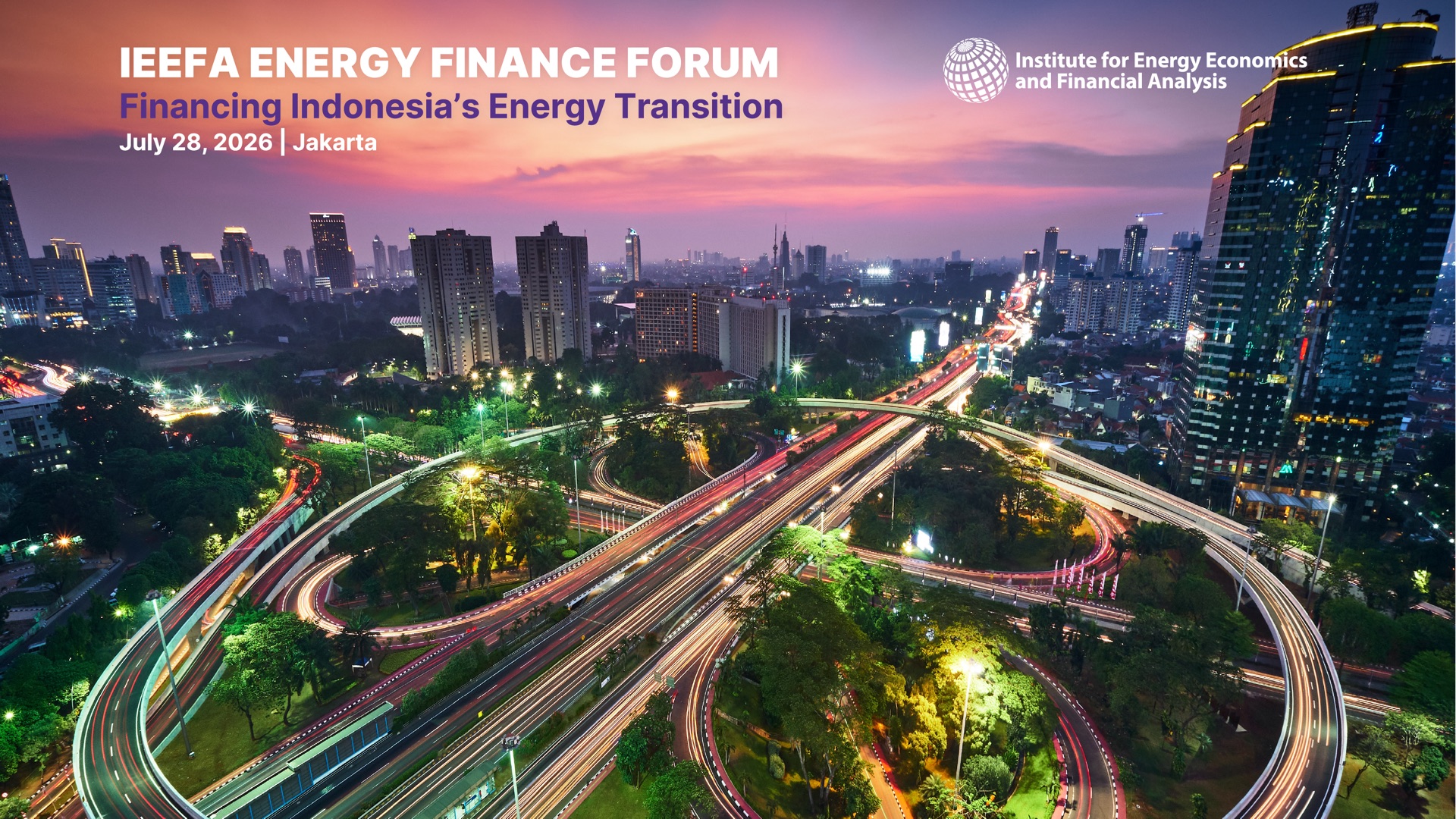
Financing Indonesia's Energy Transition
The IEEFA Energy Finance Forum will convene leaders from government, state-owned enterprises, multilateral institutions, the private and financial sectors, and civil society to discuss how Indonesia can mobilize capital to accelerate its energy transition while supporting long-term fiscal resilience and economic growth. Register your interest today. Due to high demand, a live-streaming option is now available.
*This invitation is valid for 1 person.
Tap a card for details
Indonesia's energy transition is unfolding alongside rapidly evolving energy systems across the region. Countries have adopted varying approaches to accelerate renewable energy deployment, mobilize investment, strengthen energy security, and improve system reliability. This session explores lessons from these regional experiences and examines which policies and approaches could most effectively support and accelerate Indonesia's energy transition.
Indonesia's ambitious 100GW solar program, including 20GW of grid-connected capacity, marks a turning point in its energy transition. With industrial expansion — mineral downstreaming, manufacturing, and data centers — driving rapid demand growth, this session explores how Indonesia can align renewable ambitions with rising demand, mobilize the required investment, and strengthen competitiveness in sustainability-conscious global markets.
This session explores how blended finance and public-private partnerships can mobilize capital for Indonesia's energy transition — combining concessional and commercial financing to de-risk investments, and enabling government, state-owned enterprises, and private investors to share risks and resources. It draws lessons from Indonesia's Just Energy Transition Partnership (JETP) and Energy Transition Mechanism (ETM) initiatives.
This session explores Indonesia's efforts to develop a credible, transparent, and effective carbon market — examining opportunities for state-owned enterprises, private investors, and international partners in carbon trading, while addressing market integrity, regulatory clarity, and alignment with global standards.